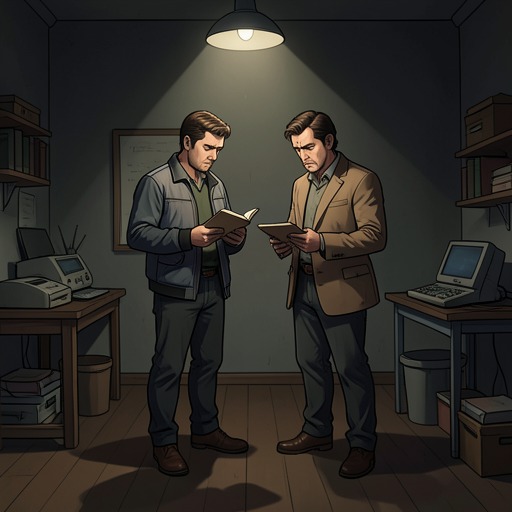
Tooru dies suddenly of heart failure
Even If This Love Disappears From the World TonightTooru dies suddenly of heart failure the night after seeing Maori, transforming a life that had seemed to continue from one day to the next into an abrupt absence. His death is not only a personal loss: it forces the people around Maori to decide whether protecting her from grief means removing Tooru from the records through which she has lived with her amnesia.
The last ordinary day
The day before his death, Tooru leaves Maori with a faint smile. The following night, while she is at home, she calls his cell phone because she wants to know how his hospital tests went. After she hangs up without an answer, the number calls back about half an hour later. Maori first hears that the tests showed no abnormalities, then realizes the speaker is Tooru’s sister rather than Tooru himself.
Tooru’s sister tells her that her brother has died suddenly from heart complications. He had collapsed at home about two hours earlier. The nearness of the loss gives the news its force: only the day before, he had been standing close enough for Maori to touch. What had looked like a pause in their conversation becomes the last time she sees him alive.
The news and its immediate impact
Maori experiences the call as a physical collapse of certainty. Her room seems to expand without limit, while the ground feels as though it is swallowing her feet. Her sister-in-law says she will explain more the next day; they arrange to meet at three in the afternoon. The account holds the sudden news beside Maori’s inability to make death comprehensible: Tooru had been present, familiar, and near, and now he is gone.
The loss also meets Maori at a particularly vulnerable point in her life. After an accident, she has lived for years with anterograde amnesia, waking without recollection of the previous day and relying on written records to understand her own past. By the time she learns of Tooru’s death, she has recovered her memory. In the wake of that recovery, the possibility of knowing what she has lost—and of encountering the loss in her diary—becomes part of the burden left by his death.
The decision over memory
Before dying, Tooru had entrusted Izumi with a request: if he died, she should erase him from Maori’s records. After his death, Izumi and Keiko must confront the request’s uncertain consequences. Leaving Tooru’s name and their shared history in the journal could expose Maori to suffering; removing them could spare her that pain, but also erase him from her life and leave Izumi with a guilty conscience.
Keiko refuses to treat the decision as a simple question of right and wrong. She tells Izumi that the outcome is uncertain whichever choice she makes: Maori might suffer if Tooru remains in the journal, while Izumi might suffer if she obeys and later wishes she had not. Keiko says she will follow Izumi’s decision, but also wants to fulfill Tooru’s last wish. His death thus persists as an ethical conflict among care, memory, and loyalty, rather than ending with the fact of his passing.
Loss carried into the future
After the records have been altered, Izumi visits Maori, who does not know Tooru has died but senses that something is wrong. She believes the data transfer for her messaging app failed and says she can no longer look at the messages reminding her how much fun she and Izumi had. Izumi hugs her and promises that they will make more happy experiences together, in messages and in real life. The gesture offers care in the immediate moment, even as the concealed reason for Maori’s unease remains unspoken.
When Maori later learns who Tooru was, she opens her diary and finds the story of their relationship in her own handwriting. The entries describe him as someone who stayed by her, treated her with care, and tried to make her days joyful; her binder also contains a page devoted to him. Her mother explains that Izumi, Tooru, and his sister had all struggled and acted according to what they believed was best for her. The records Tooru asked others to erase therefore become, after his death, the means by which Maori can encounter his presence—and the cost of trying to protect her from losing him.